Policy & Legislation
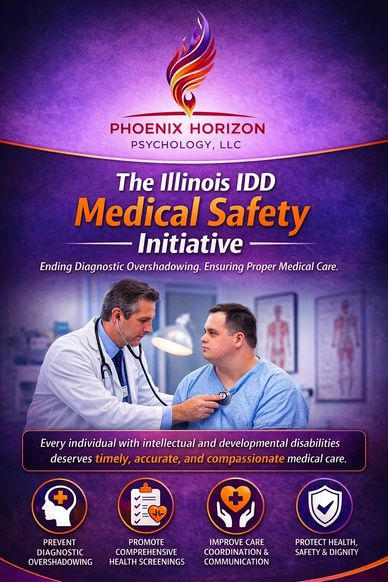
The Illinois IDD Medical Safety Initiative
Continuum of Care & Crisis Stabilization Initiative
DSP Competency & Safety Standard Initiative
House Bills
- HB5605 creates the Community Supported Living Arrangement Services Act and includes the Health Risk Screening Tool, staffing and workforce standards, quality assurance, and 24-hour availability of trained personnel for people with intense physical, medical, or behavioral support needs.
- HB4324 addresses medical absences from CILAs and requires continued per diem reimbursement when a resident is out for legitimate medical reasons; it also expressly references situations where a resident is unable to return to the CILA after medical absence.
Senate Bills / Laws
- Public Act 103-0593 is highly relevant: it added telehealth services for people with IDD in the adult DD waiver and requires providers demonstrating knowledge and experience in providing medical and emergency services for persons with IDD; it also says telehealth cannot replace in-person care when the person wants in-person services.
- SB3427 is also relevant because it includes benchmark rates for therapy and counseling for adults with intellectual and developmental disabilities, along with other DD service-rate reforms. It is not a diagnostic-overshadowing bill, but it supports the broader clinical-access side of medical safety.
- SB2500 and SB3798 both amend the Community Emergency Services and Support Act and are relevant to the crisis-response side of medical safety because they focus on getting people in behavioral emergencies to the least restrictive setting feasible and routing crisis calls toward behavioral-health response systems.
DSP Competency & Safety Standard Initiative
Continuum of Care & Crisis Stabilization Initiative
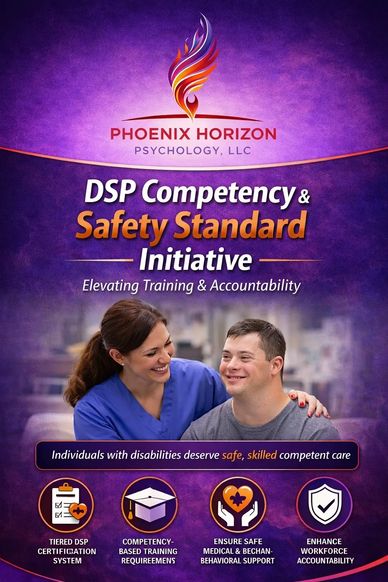
DSP Competency & Safety Standard Initiative
House Bills
- HB4747 directly addresses the Illinois direct support professional credential pilot program by delaying implementation to State Fiscal Year 2028. Even though it is a delay bill, it confirms the General Assembly is actively legislating in the DSP credentialing space.
- HB4969 is also relevant because it proposes rate changes affecting DD services, including frontline/DD service capacity. It supports the workforce-stabilization side of a competency and safety agenda.
Senate Bills / Laws
- SB3255 is the Senate companion to HB4747 and also delays the DSP credential pilot to FY2028. It is one of the clearest Senate bills tied to a statewide DSP credential structure.
- 20 ILCS 1705/4.4 already establishes the Illinois direct support professional credential pilot program in statute. The law states the purpose is to professionalize the field, improve recruitment and retention, advance skills and competencies, and further ensure the health, safety, and well-being of the people receiving services.
- SB2894 and SB3427 are not credentialing bills, but both are relevant because they address DSP/frontline compensation and rate structures.
Continuum of Care & Crisis Stabilization Initiative
Continuum of Care & Crisis Stabilization Initiative
Continuum of Care & Crisis Stabilization Initiative

House bills
- HB5458 is the clearest direct House bill match. It would require a State-operated developmental center to readmit, upon request, a former resident now in a CILA if the person or guardian consents and the guardian determines the person’s medical needs cannot be met in the CILA. That is almost exactly the “step-up level of care when the community setting cannot safely meet the need” concept.
- HB5605 is also highly relevant because it creates a more structured community-supported living framework, incorporates the Health Risk Screening Tool, addresses urgent risk and institutionalization risk, and requires 24-hour trained staffing for high-needs individuals.
- HB4324 is a supporting bill because it addresses what happens when a person leaves a CILA for hospitalization, stabilization, nursing facility care, rehab, or another legitimate medical reason. It recognizes that not all community placements are stable at all times and that there must be a workable bridge when medical needs change.
Senate bills / laws
- SB3798 is relevant because it strengthens the Community Emergency Services and Support Act and supports a more structured behavioral-health crisis response system.
- SB2500 is also relevant because it says transportation in a mental or behavioral health emergency should be coordinated to the least restrictive setting feasible.